
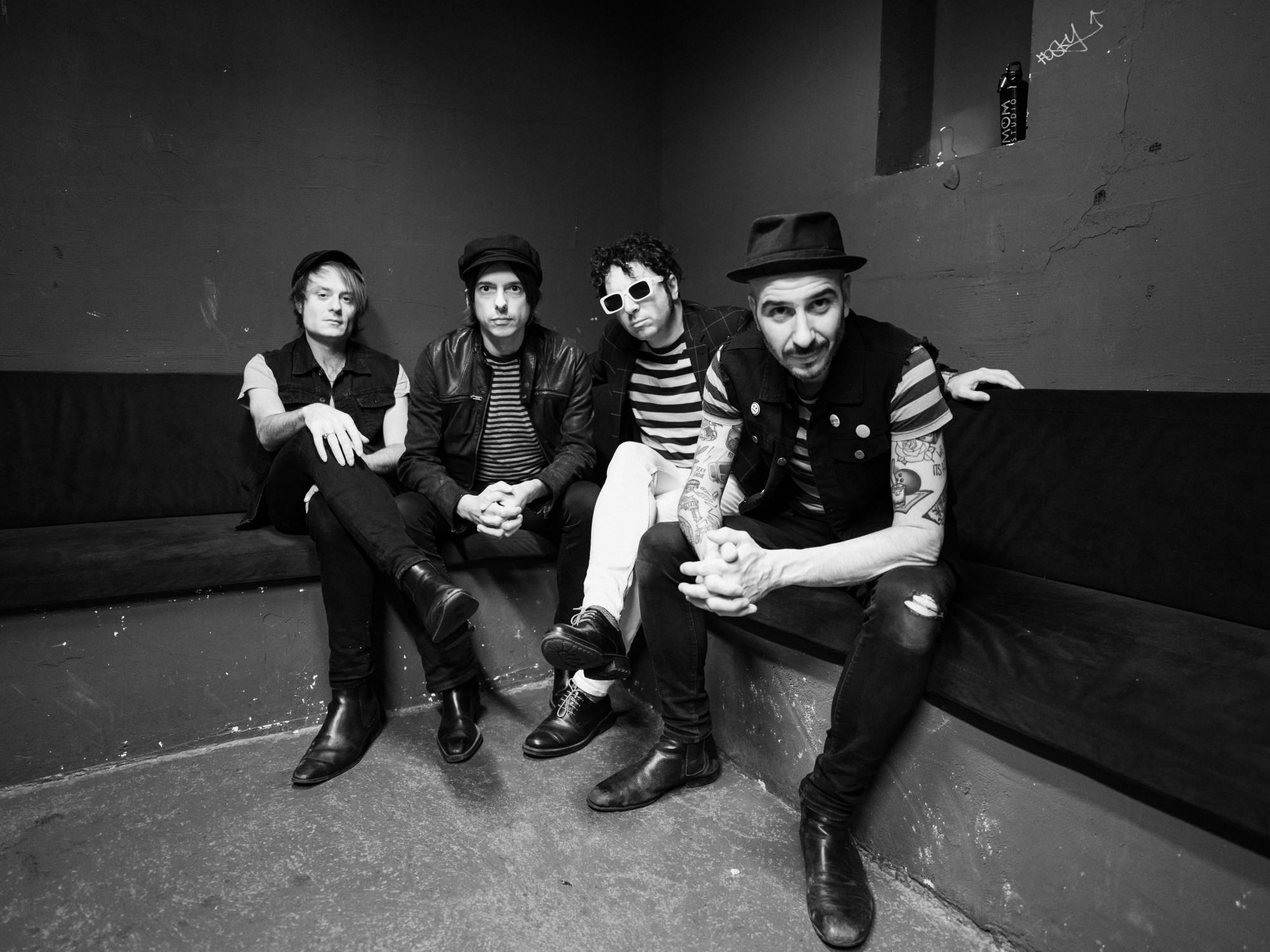
For more than two decades, Radio Days have been chasing the elusive “perfect chorus”, a never-ending pursuit of great melodies, harmonies and songs that stick in your head. With Off The Record, the Italian power pop veterans have pushed the tempo, stripped back the arrangements and returned to the direct, infectious sound that first inspired them. We caught up with Dario to talk about Radio Days’ journey, the records that shaped them, the contradictions and romance of power pop, Off The Record, playing live and why, after 23 years, that teenage feeling still hasn’t disappeared. Interviewed by Nico C.
1 – You’ve spent more than twenty years chasing what you’ve often described as the “perfect chorus”. Do you think the perfect chorus actually exists, or is the fact that you never quite find it what keeps a power pop band going?
I think it’s a combination of all those things. Obviously, thinking about writing the perfect chorus is a bit of a chimera — something you can never really reach. But I think that’s also the beauty of it, you know? Just continuing to write, trying to write the best song you possibly can, with the best melodies, the best choruses and the best harmonies.
That’s what we’ve been trying to do for the last twenty-three years, basically. And yes, probably that’s one of the things that has kept us going for all these years. It’s really important to us because, of course, we love being in a band, travelling around, playing shows and going on tour, but we also genuinely love writing good songs.
We try to write songs that we would actually want to hear on records by other bands. I think that’s always been one of the main goals for us.
2 – Power pop has always been a strangely difficult genre to define. Everyone seems to know it when they hear it, but nobody completely agrees on where its boundaries are. What makes a song or a band Power-Pop to you?
I agree, it’s always difficult to define power pop. You can talk about power pop by referring to the bands from its golden age, around 1979 to 1981, but you can also talk about power pop when it comes to bands from the ’90s, the 2000s and even today.
I have to say that we really love all of it. We love the original power pop, but we also love the more modern side of it.
So, what makes a song power pop? To me, it’s about having bright guitars, melodies that come from the ’60s, but playing them with a more punk attitude, a little faster and more energetic, with harmonies that are still very much rooted in ’60s pop.
For me, the foundation is definitely ’60s music, but played with a more punk-rock attitude — something that comes from the ’70s and from punk. At the same time, you should never forget that the most important thing is to write a great melody and a song that sticks in your head.
3 – There’s an interesting contradiction at the heart of power pop: the music is often euphoric, while the songs are full of rejection, frustration, loneliness and people waiting for the phone to ring, like one of your latest singles. Why do you think heartbreak sounds so good with handclaps and three-part harmonies?
Well, you know, I don’t know! But I see what you mean. I think there’s probably something about being a power pop fan that makes you a bit of a loser.
Because if you think about it, you’re obsessed with a genre of music that 99.9% of the people on this planet don’t even know exists. So you’re already starting with the odds against you.
And that’s the huge contradiction: it’s such an amazing genre, but hardly anyone even knows it exists. So if you listen to power pop, there’s a good chance that at some point your girlfriend is going to leave you.
And then everything comes full circle: you get dumped, you write a beautiful power pop song about it, and suddenly you have another great song. So I guess it all works out in the end!
4 – If you had to trace your own power pop family tree, where would it begin? The Beatles? Big Star? The Raspberries? And which records were the real turning points that made you think, “this is the kind of band we want to be”?
We actually talked about this quite recently, when we went to Japan with the Peawees. We went to this amazing place owned by Fifi from Teengenerate, called Poor Cow. It’s a fantastic bar where you can listen to all these great records — power pop, punk, garage, everything. Fifi has an incredible collection there.
He has this thing where, whenever people visit, he asks them to name their ten favourite records and their ten favourite songs. So I started my own list with The Beatles, because I think everything starts there.
Then I went on to The Ramones, because I think that, in a way, The Beatles plus The Ramones is where power pop really comes from.
And then, among the power pop bands, I mentioned Paul Collins Beat, Elvis Costello, The Rubinoos, Big Star, The Knack and The Flamin’ Groovies. Those are some of the bands that really shaped the way I hear power pop.
As for the record that was a real turning point for us, it was definitely the first Paul Collins Beat album. When we heard it, I think that was the moment when we really decided, “This is what we want to do. This is the kind of music we want to make.”
At the time, Paco and I were still playing in the Retarded, but we already had Radio Days. And we just looked at each other and thought, “No, this is too good. We have to make this kind of music. We have to make records like this.”
5 – Your sound has always carried a strong late-’70s streak, from The Rubinoos and TheKnack to The Records and early Elvis Costello. What fascinates you about that particular moment, when ’60s pop craft collided with the speed and economy of punk and new wave?
As I said, that period is really the ideal one for us — the golden age of power pop. That’s where we really feel at home.
When you’re talking about The Rubinoos, The Knack, The Records, Elvis Costello, Paul Collins — we absolutely love all those bands. What we love about that particular period is that they wrote incredible songs and then played them even more incredibly. All those records are just amazingly well played. They were fantastic musicians, and that’s something that has always fascinated us too.
Power pop is actually quite a difficult genre to play. I think that’s also why it took us a few years to really get there. You have to learn how to play better, because the arrangements might sound simple, but there’s actually a lot going on.
We all came from punk bands, so over the years we had to refine our playing and become better musicians. I think that process has been a big part of our journey as a band.
6 – You also grew up with the ’90s revival: Teenage Fanclub, Weezer, Fountains Of Wayne. Would you define those bands Power-Pop, or…
Absolutely. For us, those bands are power pop. We’re not obsessed only with the first period of the genre. We love all the different eras of power pop, including the more modern stuff.
For us, it always comes down to the songs. That’s what matters most. We’re not interested in being power pop Nazis or obsessing over whether a band is “pure” enough to belong to the genre.
We just care about great songs.
7 – Today there seems to be another thread connecting that history to bands like The Lemon Twigs, Uni Boys and a wider wave of jangly guitar pop. Do you feel power pop is having another moment, even if nobody necessarily calls it “power pop”? Do you feel part of it?
Yeah, absolutely. It’s great to see young bands like The Lemon Twigs, Uni Boys and Mod Lang. We really love them, and it’s great to see a bit more interest in this kind of music again.
I also played with Sharp Pins recently in Italy with another band of mine, Fuzz Pony, which is still a very early stage project. I have to say, they’re all fantastic bands and talented musicians.
We don’t necessarily feel like we’re part of this new wave, though. We’ve been around for so many more years, so just for generational reasons, but I think it’s great for everyone involved in this world — for bands, for the music itself, and for anyone connected to power pop in some way.
It can only be a good thing. The more young bands there are, and the more successful they become, the better. We’re all for it.
8 – Power pop has spent much of its history being commercially unsuccessful music obsessed with the language of hit singles. Is that contradiction part of its charm?
No, it’s definitely part of its charm. I think there’s something very romantic about playing a genre of music that has always had this reputation, but also this particular quality: it’s incredibly catchy, so in theory it should be hugely successful, but in the end it remains very much a niche genre and, commercially speaking, it’s often a complete disaster.
I think that’s a beautiful contradiction, and it’s definitely part of the charm of power pop. There’s something quite romantic about making music that sounds like it should be a hit, but somehow never quite becomes one.
9 – You all come, or still play, in punk bands. How has your idea of melody changed over twenty years? Are you better at recognising a great hook now, or were you perhaps more instinctive when you were younger?
I don’t know, I think we’ve definitely changed, but in the same way you naturally change as you grow up. Your tastes change a little, the way you are changes, and even the way you play changes.
As I was saying before, you actually have to become a better musician to play power pop properly. We’re all more or less self-taught. Some of us studied a little more, some a little less, but basically we all came from that kind of background, so it took us some time to really learn how to play this music well.
But I think the spirit has always stayed the same. Even when we were very young, we all shared the same idea of how great it was to play songs with great melodies and great harmonies. That’s something that has never changed for us. It’s been a constant.
Maybe we’ve changed a little in the way we play and in the way we approach things, but it’s just been a natural, healthy process of growing up — musically, but also as human beings.
10 – On Off The Record you’ve deliberately raised the BPM and stripped the arrangements down. Was there a conscious feeling that good power pop should get to the point faster?
Yes, definitely. On this record in particular, we deliberately increased the tempo of the songs, and the arrangements are also a little simpler and more direct. It was a conscious choice, partly because we were thinking more about how the songs would work live.
On our previous records we were probably a bit more varied, with more different kinds of songs and arrangements. This time, though, we wanted to make a more classic power pop record, so we wanted the whole album to be quite cohesive in terms of style.
We’ve never really done that before — maybe a little bit on our first album, C’est La Vie — so that was definitely one of the goals we set ourselves with this record.
And we’re really happy with the result. I think these songs can work really well live.
11- If we took away the obvious classics, what are five power pop records you think everyone should hear at least once? Not necessarily the “best” five, but five records that explain why you love this music.
It’s difficult to recommend five records that aren’t classics, but I’ll give it a try.
Well, first of all, Off The Record by Radio Days. And if you’ve made it this far and you’re reading this without listening to it, you’re crazy!
Then I’d say Cotton Mather’s Kontiki, At Home with Cherry Twister by Cherry Twister, Falling In Love by Trevor Blendour, and Brand New Beat by Kurt Baker.
Okay, these aren’t exactly obscure records, but they’re all amazing! Well… actually, when I think about it, they’re classics too. So I guess I completely failed at answering the question! But these are definitely five records that I love and that, for me, really explain why I love power pop.
12 – After hundreds of shows, records, Japanese tours, tiny clubs and festival stages, what still gives you that teenage feeling about being in a band? Is there a moment when playing these songs still feels exactly as exciting as it did in 2003?
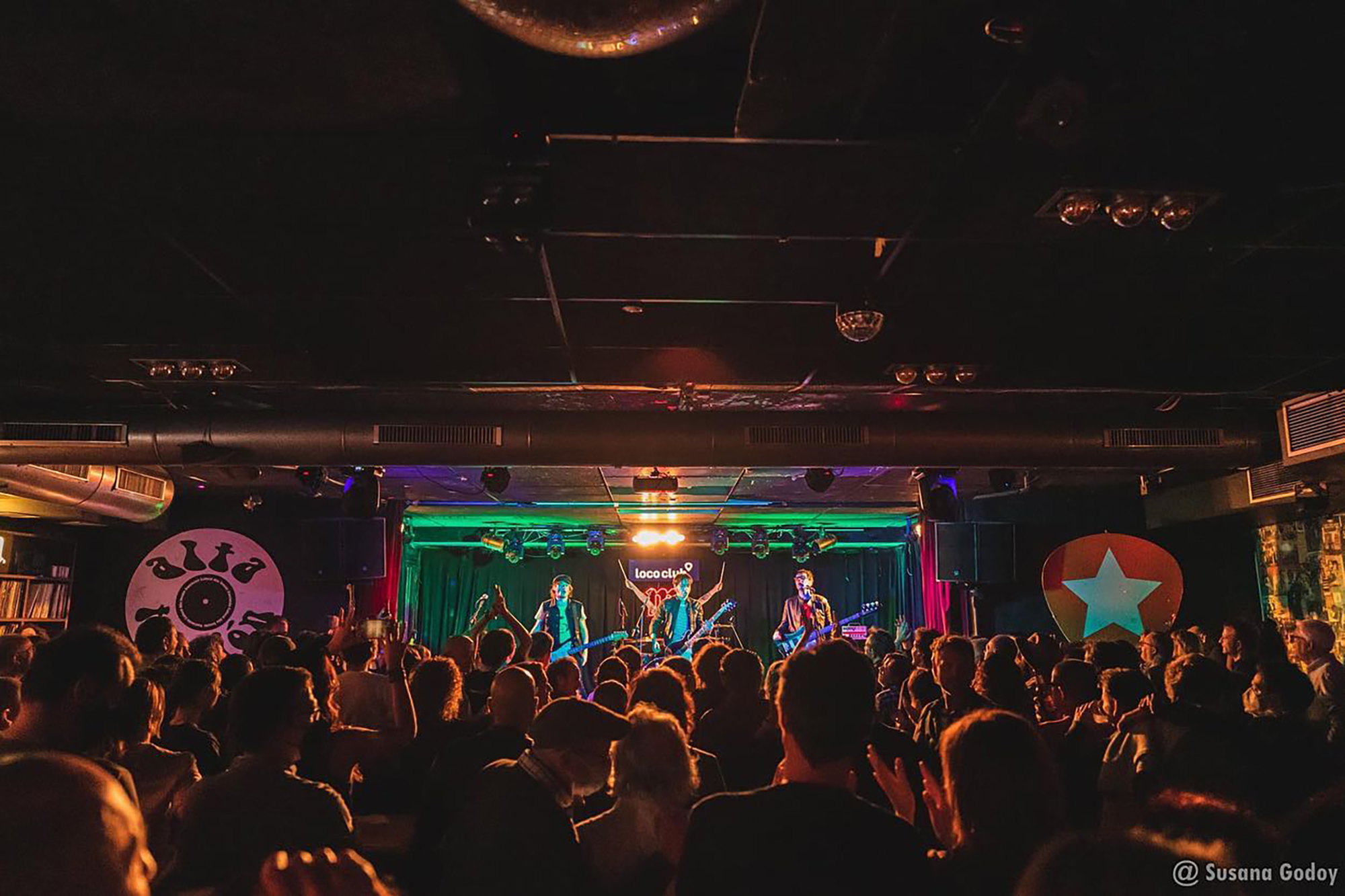
You know, I think so many things have changed in our lives. We’ve changed a lot as people. But the moment we get on stage and start playing together, the feeling is still the same as when we were kids.
In the end, playing live is probably still the most natural thing for us. It’s also the thing that has given us the strongest reason to keep going and to keep doing this after all these years.
13 – Dario, you also play with The Peawees. What are the differences, in songwriting and performing live?
I started playing with The Peawees in September 2021, and I had always been a big fan of the band. So it was very easy for me to join them because I already knew the songs. It felt very natural from the beginning.
As for the differences between The Peawees and Radio Days, I’d say The Peawees are more rock ’n’ roll. Hervé is also a songwriter I really love, and he’s very focused on writing great songs, but he has a very personal and distinctive style that’s much more rooted in rock ’n’ roll and soul music, and he has the perfect voice to do it.
That also comes through in the live shows. They’re very wild — really wild! They’re much more focused on power, energy, definitely faster than Radio Days.
And I think playing with The Peawees has probably influenced me a little bit too. I think some of that energy found its way into Off The Record, especially in the way I wrote some of the songs. Maybe some of them are a little more intense and pushed than what I might have written before.
I think that’s a very natural thing. When you play with different musicians and different bands, you inevitably take something from those experiences and bring it into what you do.
14 – If Radio Days could travel back to 1979 with one copy of Off The Record under your arm, who would you want to play it to first?
Wow, 1979… it would be really difficult to play Off The Record to someone and think that, with all the competition around at the time, we might actually have a chance of getting a record deal.
Anyway, I think I’d probably play it to Paul Collins. Not so much to have him listen to Off The Record, but because if I could go back to 1979 and meet Paul Collins, I could see The Beat that year. And that would be absolutely incredible. It’s a dream!
And thank you so much for the interview. It’s been amazing. It’s actually become more like a book about power pop than an interview!
But seriously, thank you very much. It’s been a pleasure.
Nico C.

