

Photography and review by Leila Edelsztein Satz
The London-based band Dry Cleaning first gained acclaim in 2019, recognised for the sonic discordance created by Florence Shaw’s languid, detached vocals over a granular blend of guitar, bass and drums. Distilling the UK’s cultural tendency towards sardonicism, her confessional monologues at times feel like those of a third protagonist in a musical rendition of Peep Show – dry, deadpan musings reminisced over a fast-paced backing track. I encountered their album ‘New Long Leg’ for the first time when I was living in Glasgow, and their noise seemed especially attuned to my inner monologue while walking through streets of tenements in winters that didn’t end. We share the same accent, and I guess I felt like something in Shaw’s cadence (between resigned, bemused and at times even spiteful) resonated both figuratively and literally with my own voice: with living in a loud city but feeling inwardly quiet, lethargic.
I think a big part of this resonance comes from the kind of social realism that their earlier work speaks to: assertions that “Nothing works, everything’s expensive and opaque and privatised” and impassive tales of transformations such as “The pub where all those things happened is just called Moo now, some kind of burger thing”. The image that Dry Cleaning transmits is one of a city antagonised by regeneration schemes, of greying concrete and banal service franchises. One song’s ending – “bear witness, pass no comment, simply be there to see it” – feels like the underlying demand of London’s relentless urban renewal, reduced to a map of memories overwritten and architectures overgrown. By contrast, their latest album ‘Secret Love’ (2026) moves from observation and commentary to strange characters and impulses. The second song in the album is sung entirely from the first person perspective of a cruise ship designer, ending ominously with the lyrics “I make sure there are hidden messages in my work”. The album sees Shaw pivot more frequently to melody, harmonising with the voices of her bandmates. If up until now Dry Cleaning had sonically synthesised the reality of metropolitan living with personal reflections and quirks, ‘Secret Love’ encapsulates a tonal shift into a certain surrealism – both in sound and songwriting.
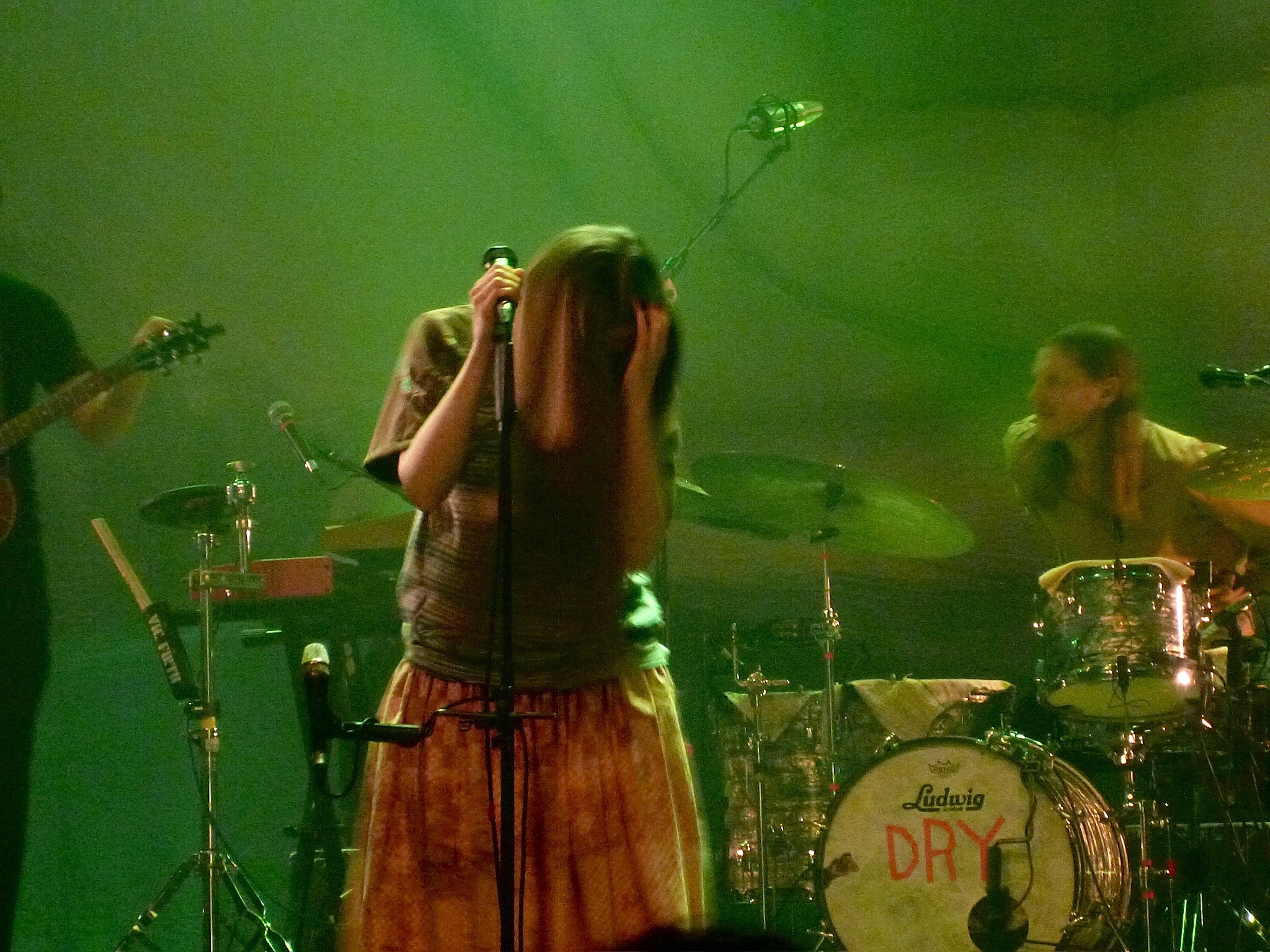
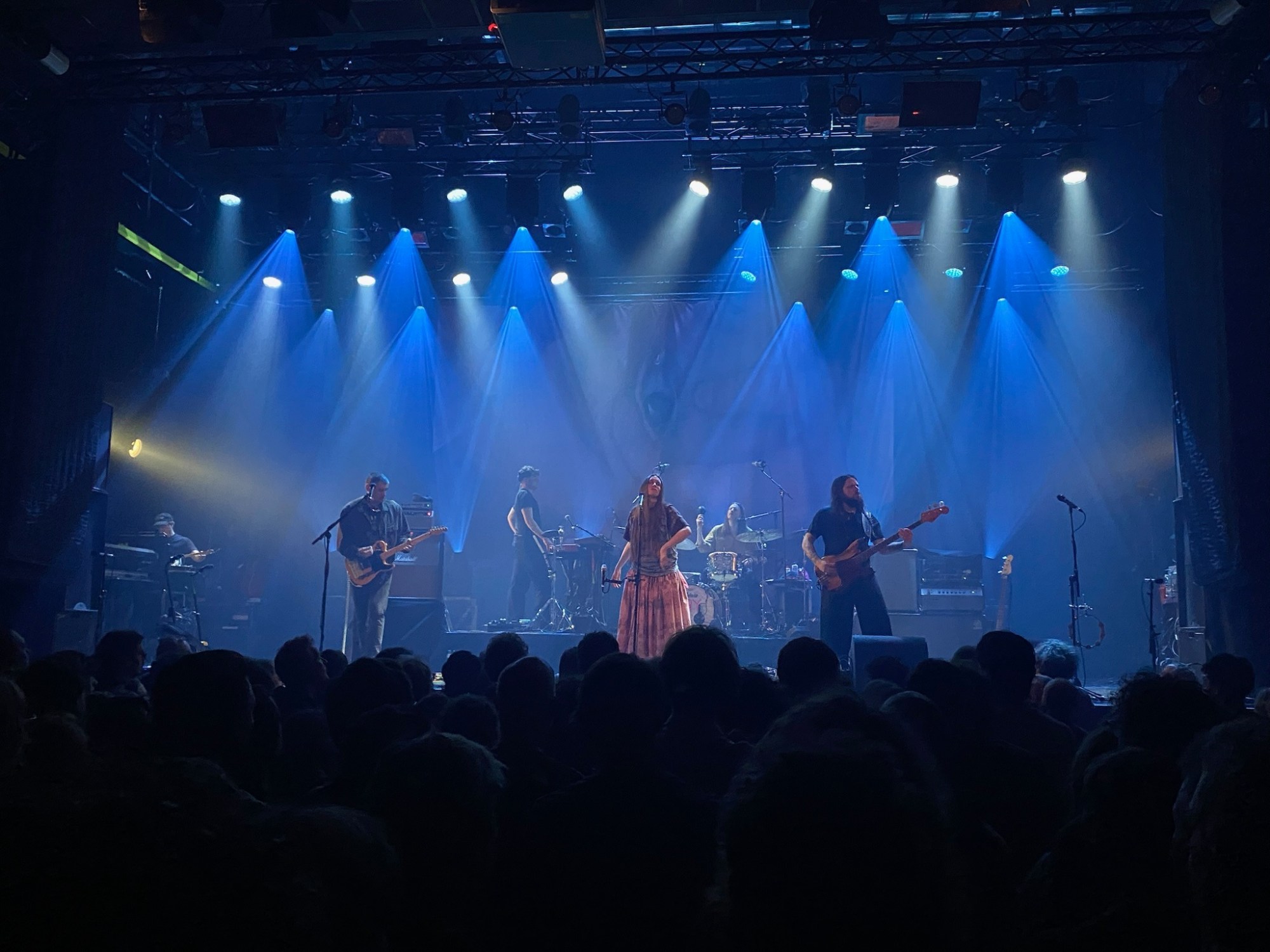
In light of the deadpan sound for which they’ve become recognised and loved, I had a difficult time imagining what Dry Cleaning would be like live. Would they lean into the dry, withdrawn tone of their vocals, or the nosienik of their instrumentals? The verdict was not quite either. The band occupied the stage with sincere enthusiasm and mirth, so much so that the crowd at Melkweg appeared comparatively flat, as if they’d been anticipating a more stoic delivery. At one point, Shaw encouraged us to dance with our hands (if nothing else), “You perform for us and we’ll perform for you”, she spoke into the mic. They followed through on their promise, with bassist Lewis Maynard head banging his way through the remainder of the set. Far from resigned or detached, Dry Cleaning galvanised their discography under blue and green light, reminding us all that listening is reciprocal – not just one-way performance to be coolly received, but an encounter.

