
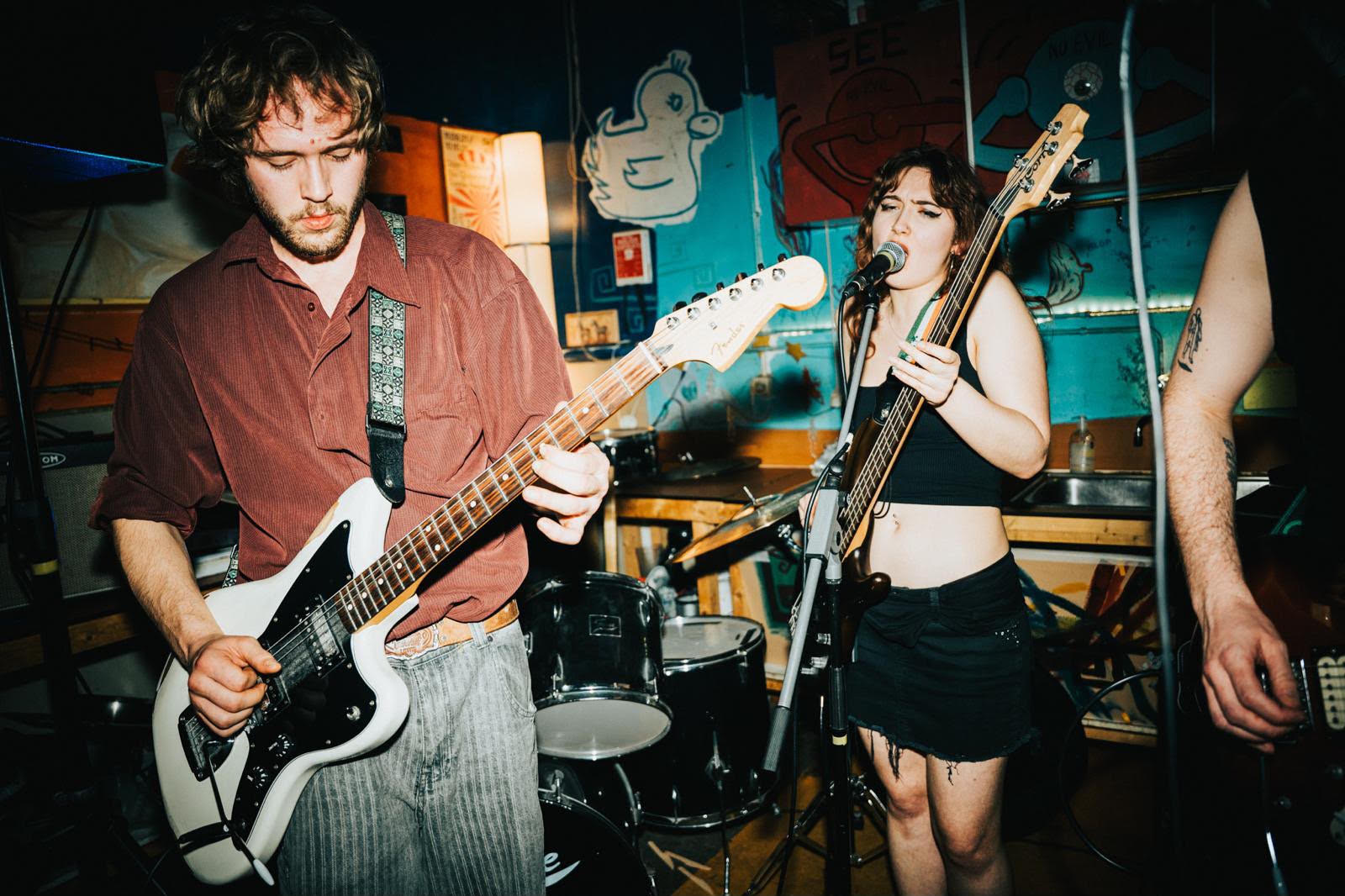
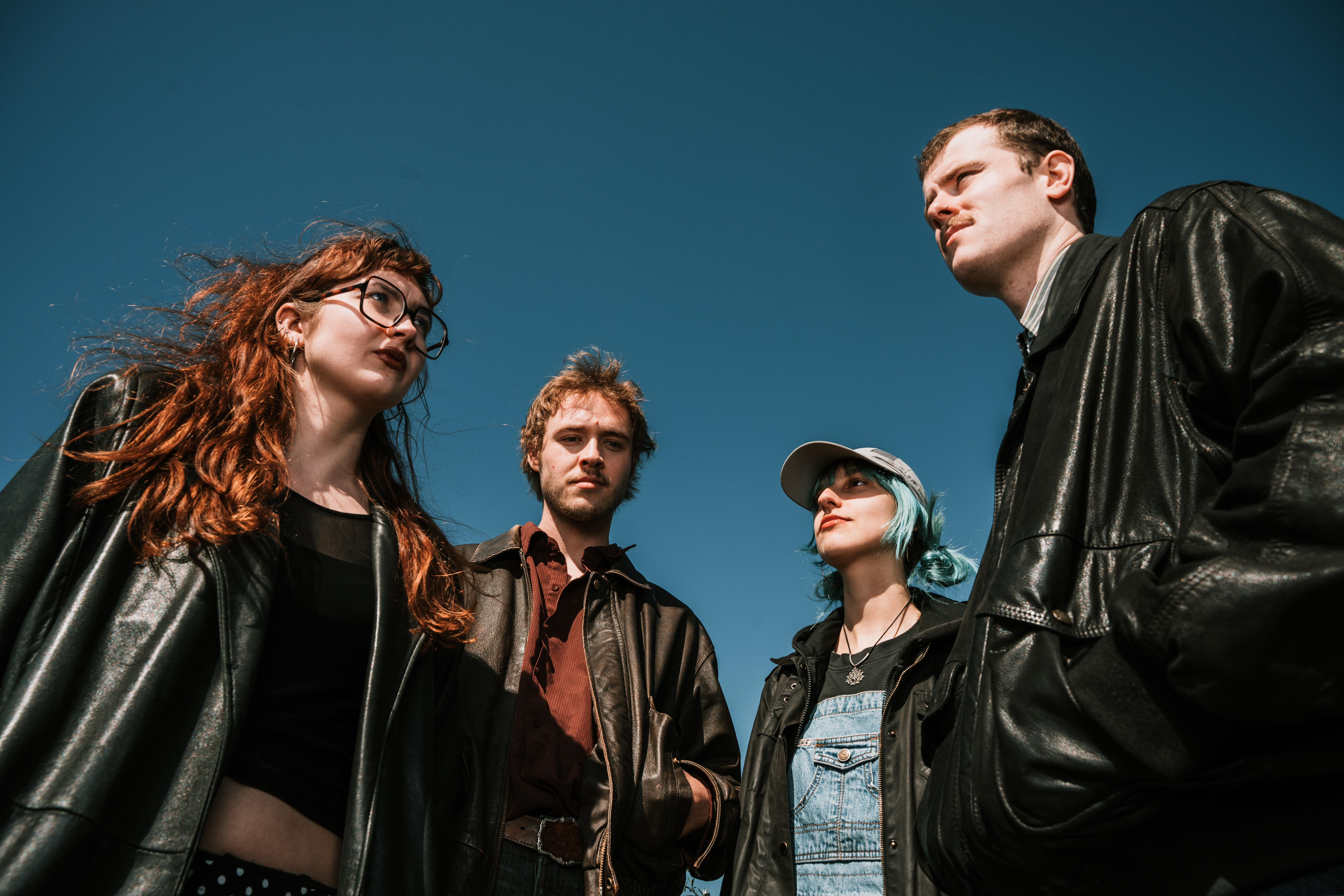
I first heard of Mother Johnson through their vocalist/guitarist Emily Wesse, who very modestly told me that she was in a band before we started working our first shift at Doctors Without Borders together. I connected my phone to the office speakers and she put on ‘100 German Cities’. I was completely taken aback. After years spent idolising bands like Slowdive and Mazzy Star – my knowledge of their inception and processes syphoned solely through youtube videos and articles – to be faced with the opportunity to speak to a band that was following in their sound felt unmissable.
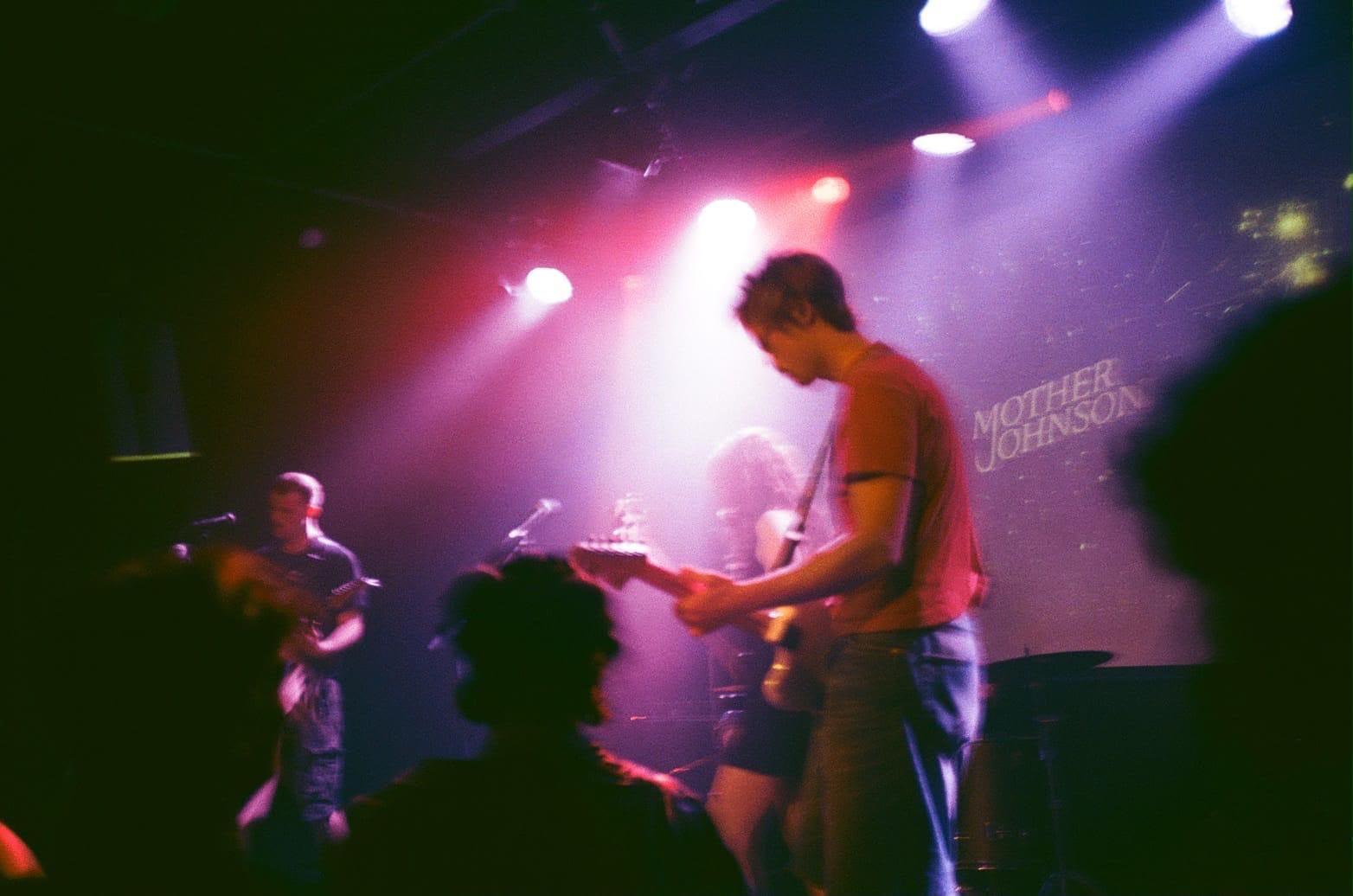
Two weeks later, I went to see Mother Johnson at Cinetol for the release of their debut EP Lindsay, I miss you. In a recent interview published with My Mum had a Mullet, the group stated that “if you love music, if you love the scene, you should see small bands” – and this is exactly the ethos that their stage presence reaffirms. There was an intimacy to their set that emulsified both stage and floor, artists and audience. They spoke to the crowd about their EP between songs with easy excitement, much of which we later elaborated on.

Mother Johnson began with a Political Science party at ACTA and what Emily recalls as Shane and Trym’s “shameful guy-plays-wonderwall-at-a-house-party thing”, leading to an exchange of numbers and, a few days later, a plan to practice some original music. The Amsterdam-based quartet, Emily Wesselink, Shane Farragher, Trym Tofte, and Kim Strien was thus assembled through a party, a subject in common and a mutual friend’s desire to sharpen her drumming. Emily grew up in Canada, Shane in Galway, Trym in Norway, and Kim in the Netherlands, and so the band came to be less based in a singular common culture and more in a shared adulation for music, and a willingness to converge in making it together.
Speaking about their namesake, Mother Johnson explained: “It was a perfect mix of the camp (Mother) and mundane (Johnson), I think it fits us well, big silly personalities, loud music, but max three or four chords per song.”
This sense of play, iteration and opposition is a through-line in their process. With vocals sung in turn by Shane and Emily and lyrics that coalesce the songwriting and composition of the whole group, Lindsay, I Miss You comes across as a miscellaneous collection of emotional coordinates gathered across years, places and people.
“Champagne (Happy For You)” is the oldest song on the tracklist, dating back to when Shane was seventeen.
“Champagne is quite difficult for me to play even now,” he admits. “There is a certain cringeness that I get when being confronted with that 17-year-old boy… dreaming about someone he has a crush on, jealously spouting ‘happy for you’.”
Rather than feeling out of place among newer material, the song became part of a larger emotional thread.
“It doesn’t feel like isolated moments in time, but a more general kind of melancholia that certain people stand in for, but that remains there across our upbringings and into today. While Champagne was written so long ago, ‘Opener’ was literally finished the day before we recorded – so the question of time isn’t as big as the necessity for a feeling.”
The prioritising of emotion over chronology and individual narrative is a defining characteristic of the EP’s creation. Memory becomes collective in its sonification: pooling together places with people and people with symbols. As an intermediary between signs, bodies, and meanings, music inevitably forms a kind of cosmic glue between inner life and landscape: the markers of one person bleed and osmose into those of another, propagating feelings and associations between artist, listener and medium. The dissolution of timeline and place is already seeded in each band member’s disparate geography, and becomes reified in their songwriting practice. The title of the EP itself emerges as a product of this slippage – “sure there are songs about missing places (German Cities), but missing people – or allowing new ones to come in — is also such a big part of it. Hence a lot of people think ‘Lindsay’ is the name of a person – but the fact that it’s not (it’s Emily’s hometown, Lindsay Ontario) is still a perfect slippage.”
Shane and Emily write lyrics independently, “We have our own different processes of writing which we never do together – hence probably why they are so personal”, but the songs become collective once they enter the rehearsal room, rarely requiring explanation.”When I hear Shane’s lyrics he rarely has to explain to me what they mean”, says Emily. This intuitive transference is extended into the musical arrangements. Songs rarely remain in the shape theyfirst arrive in, remoulded with unprecedented guitar solos, bridge breakdowns and unconventional pacing: “One person will tend to propose a song with a basic structure and we go from there. It’s important we do at least one structural ‘fuck up’ or alteration in each song. Disrupting the song’s expected narrative is important to us.” The making of Lindsay, I Miss You was equally subject to disruption.
After spending money on a studio session that ultimately went nowhere, the band found themselves with almost no budget. Instead of shelving the project, they persisted in bringing it to life as “a bit of a sonic frankenstein situation. We recorded most of the stills on rampant coffee highs in Stan’s bedroom (Producer Stan Ward of Rockpool Dramas), and I (Shane) had a friend (shoutout to Connie) who volunteered at OCCII, so we managed to get a long 9-5 in there one day to record live drums and some rhythm guitar and bass. Stan’s job was to technically stitch all of that together. I don’t know how he did it but he did, and Lindsay was born”.
Fittingly, the production of the EP follows in the style of its content as an assemblage of pieces collected over time: an aural, lyrical and atemporal palimpsest.
The band’s influences reveal a similar mirroring. The hazy dreamscapes of Slowdive and Mazzy Star sit alongside the mechanical baritones of Joy Division, the expansive guitars of Mogwai, the melancholy of The Cure and the experimental, serrated edges of Sonic Youth. While none of these references dominate, traces of each can be heard in Mother Johnson’s soundscape.
Despite the group’s scattered origins, Amsterdam has become the foundation from which they continue to grow. Shane ventures that there’s a version of his life where Mother Johnson might have formed back home in Ireland, surrounded by the country’s thriving independent music community, but is quick to acknowledge what they’ve found in the Dutch capital. “There are few places as rewarding to play in as Amsterdam”.
The city’s DIY network has been fertile ground for many memorable moments, from opening for Barren Sea at Cinetol to piling 120 people into Shane’s kitchen (more than once) in what he recounts as an “ecstatic” event.
Mother Johnson’s plans for the future are open-ended. Maybe Galway, maybe more touring.
Lastly, we returned to their encouragement to support local music scenes, asking which up and coming Amsterdam-based bands they would recommend to our readers. They replied with a rich offering:
“Turmeric, Barren Sea, her loving aftertaste, crashing, common sexuality— all amazing shoegaze adjacent, all doing wonderful things with guitars. Oh and Rockpool Dramas for some indie greatness. Shout out to Stan, again.” We will definitely be looking into them, and so should you! We hope to see you wherever Mother Johnson plays next, whether Galway, Cinetol, or someone’s kitchen. (Emily, I’ll see you back at work first).
Article by Leila Edelsztein-Satz
Pictures by @hindele.nl IG

